
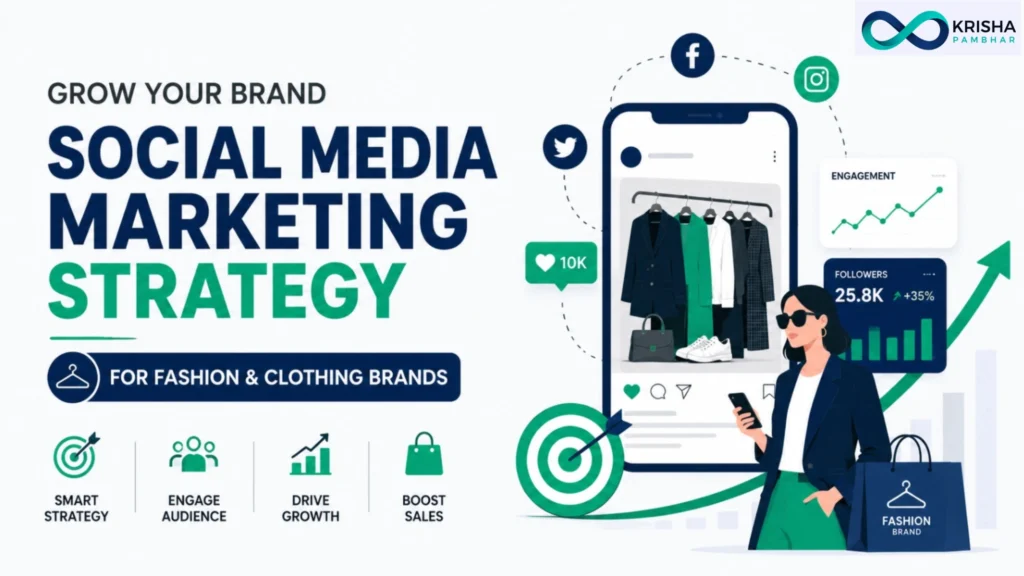
Social Media Marketing Strategy for Fashion and Clothing Brands is essential for businesses that want to build brand awareness, engage their audience, and drive consistent online sales. Fashion is one of the most visual, fast-moving, and trend-driven industries in the world, making social media its natural home. A clothing brand without a strong social media presence today is essentially invisible to the audience that matters most: style-conscious, mobile-first shoppers who discover new brands through their feeds rather than storefronts. This guide breaks down a complete, practical social media strategy for fashion brands, built on real industry practices, platform data, and proven campaign patterns, so you can turn followers into loyal, paying customers.
What Is the Best Social Media Strategy for Fashion Brands?
The best social media strategy for fashion brands combines strong visual storytelling, consistent posting, influencer partnerships, and platform-specific content — typically Instagram and TikTok for discovery, Pinterest for inspiration, and Facebook for community and ads. It focuses on emotion, identity, and lifestyle rather than just product photos.
Fashion buying is rarely a purely logical decision; people buy clothes because of how they make them feel, look, and appear to others. A strategy that only posts product shots misses this entirely. The strongest performing fashion brands build content around three pillars: aspiration (how the outfit fits into a lifestyle), authenticity (real people wearing real clothes), and accessibility (clear pricing, sizing, and buying steps). For example, brands that mix polished lookbook shoots with unfiltered customer try-on videos consistently see higher engagement than those posting studio images alone. Consistency matters as much as creativity — a predictable posting rhythm trains the algorithm and the audience to expect and look for your content. Combining organic storytelling with paid promotion and influencer seeding creates a strategy that works across every stage of the buyer journey, from first discovery to repeat purchase.
How Can Clothing Brands Grow Through Social Media?
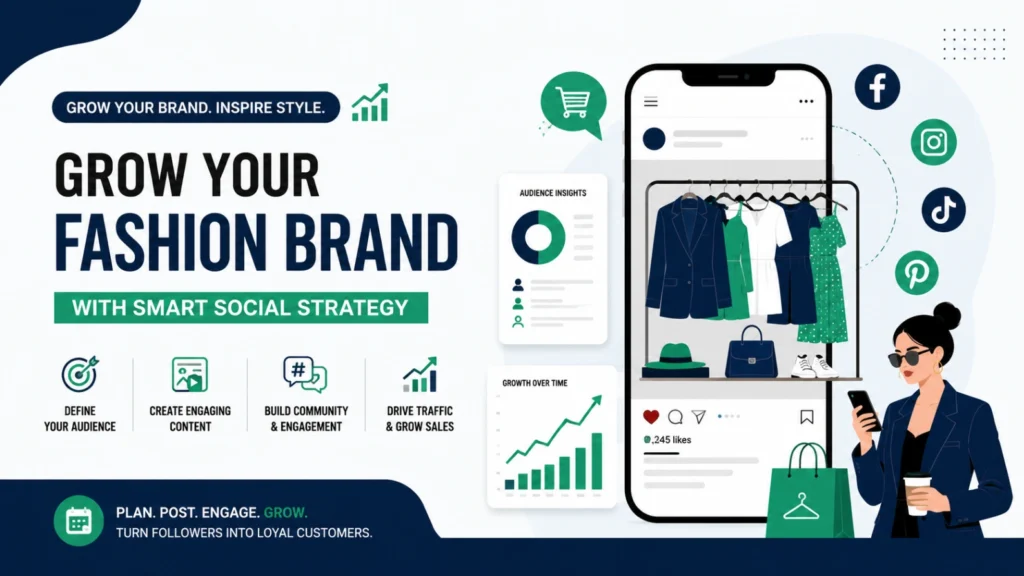
Clothing brands grow on social media by consistently showing up in front of the right audience, building trust through user-generated content, collaborating with micro-influencers, running targeted ads, and making the path from “see it” to “buy it” as short as possible.
Growth rarely comes from a single viral post; it comes from compounding small, consistent actions. A practical example: a small clothing label that reposts customer photos every week builds social proof without spending on production, while simultaneously encouraging more customers to tag the brand for a chance to be featured. Micro-influencers (10,000–100,000 followers) often deliver better conversion rates than celebrities because their audiences trust their recommendations as genuine, not sponsored noise. Shoppable posts and product tags remove friction, letting a browsing user become a paying customer in two taps instead of five. Growth also depends on data: reviewing which posts drive saves, shares, and link clicks — not just likes — tells a brand what actually moves people toward purchase. Brands that treat social media as a two-way conversation, replying to comments and DMs quickly, also see stronger loyalty and repeat purchases over time, since responsiveness itself becomes part of the brand experience.
Social Media Marketing Strategy for Fashion and Clothing Brands
five connected steps: knowing your audience, choosing the right platforms, creating a consistent content mix, engaging authentically, and measuring performance to refine the approach continuously.
Think of this as a cycle rather than a one-time plan. Many brands make the mistake of treating social media as a broadcasting channel — post and forget — when it functions better as a feedback loop. You publish content, observe what resonates, and adjust the next batch accordingly. A useful analogy is a physical retail store: you wouldn’t keep the same window display for a year regardless of foot traffic reactions, and social media content should be treated the same way. Successful fashion brands typically allocate content across categories such as new arrivals, styling tips, behind-the-scenes production, customer features, and seasonal campaigns, keeping the feed varied but recognizable. This structure also supports how to promote a fashion brand on social media effectively, since a balanced content mix keeps both new visitors and loyal followers engaged for different reasons. Later sections of this guide expand each of these five steps in detail, so you can apply them directly to your own brand calendar.
Quick Social Media Strategy Framework for Fashion Businesses
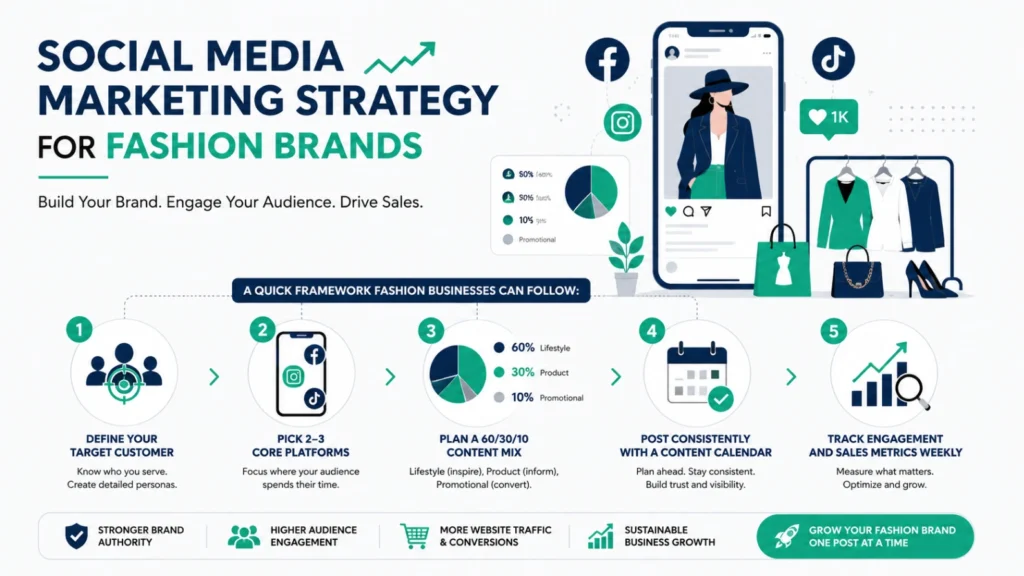
A quick framework fashion businesses can follow: (1) Define your target customer, (2) Pick 2–3 core platforms, (3) Plan a 60/30/10 content mix (lifestyle/product/promotional), (4) Post consistently with a content calendar, (5) Track engagement and sales metrics weekly.
This framework is intentionally simple because complexity is often what causes small and mid-sized fashion brands to abandon their social media efforts within a few months. Start narrow: rather than trying to master five platforms at once, dominate two or three that match your audience’s habits. The 60/30/10 rule works well as a starting ratio — 60% lifestyle and inspirational content, 30% direct product content, and 10% promotions or discounts — because it prevents the feed from feeling like a constant sales pitch. A content calendar, even a simple spreadsheet, removes the daily guesswork of “what do we post today,” which is often the real reason posting becomes inconsistent. Weekly tracking doesn’t need to be complex either; monitoring saves, shares, click-throughs, and actual sales attributed to social traffic gives enough signal to adjust course. Brands that revisit this framework monthly, rather than setting it once and forgetting it, tend to see steadier growth than those chasing viral trends without structure. If creating and executing a consistent strategy feels overwhelming, working with a social media marketing consultant can provide expert guidance, streamline your content planning, and help you achieve sustainable growth more efficiently.
How We Developed This Social Media Marketing Strategy
This strategy draws on widely observed patterns across the fashion e-commerce industry, common practices used by successful independent and established clothing brands, and platform-reported behavior around visual commerce, influencer marketing, and shoppable content.
Rather than relying on theory alone, this guide reflects how fashion brands actually operate day to day — from planning content calendars to responding to real customer behavior in comments and direct messages. It considers what is realistically achievable for a small clothing brand with limited resources, as well as what a larger, multi-platform operation might need. The recommendations are grounded in commonly cited industry practices: prioritizing visual consistency, treating influencer partnerships as long-term relationships rather than one-off transactions, and using data to guide content decisions instead of guesswork. Where relevant, comparisons between platforms and approaches are included so brands can make informed decisions rather than following one-size-fits-all advice. This approach is intended to be practical and adaptable, recognizing that a streetwear label, a bridal boutique, and a sustainable clothing brand will each need to apply these principles differently, even though the underlying framework remains consistent across the fashion industry.
Understanding Your Fashion Brand's Target Audience
Understanding your target audience means identifying who buys your clothing, why they buy it, where they spend time online, and what emotional or practical need your brand fulfills for them — this shapes every content and platform decision that follows.
Age, location, and income are a starting point, but fashion audiences are better defined by lifestyle and values. A budget-conscious Gen Z shopper looking for trend-driven pieces behaves very differently from a working professional seeking timeless, durable wardrobe staples, even if their ages overlap. Building simple customer personas — including preferred platforms, shopping triggers, and common objections — helps content teams create posts that speak directly to real concerns instead of generic marketing language. For example, a sustainable clothing brand might find its audience cares deeply about sourcing and materials, which means content should highlight fabric origins and ethical production, not just outfit styling. Reviewing existing customer data, such as past purchases, comment patterns, and DM questions, often reveals audience insights that guesswork misses entirely. Brands that skip this step tend to create content that looks appealing but doesn’t convert, because it isn’t answering the specific questions or desires of the people actually buying. This foundational understanding directly informs the next step: choosing where and how to promote your brand.
How to Promote a Fashion and Clothing Brand on Social Media
To promote a fashion and clothing brand on social media, combine organic content (styling videos, lookbooks, behind-the-scenes posts), influencer collaborations, targeted paid ads, and interactive formats like polls, giveaways, and live shopping events to reach and convert your audience.
Promotion works best as a layered approach rather than relying on a single tactic. Organic content builds long-term trust and searchability, while paid ads accelerate reach to new audiences who haven’t discovered the brand yet. A practical example of how to promote a clothing brand on social media: pairing a new collection launch with a short-form video styled by a relatable creator, boosted with a small ad budget targeting lookalike audiences of existing customers, often outperforms either tactic used alone. Giveaways and interactive polls aren’t just engagement tricks — they generate first-party data about customer preferences that can guide future collections and content. Live shopping events, increasingly common on Instagram and TikTok, combine entertainment with direct purchasing, reducing the gap between interest and transaction. Brands should also not underestimate consistency in captions and hashtags, since discoverability through search-style browsing on platforms like TikTok and Pinterest is becoming as important as the algorithmic feed itself.
Complete Social Media Marketing Strategy for Fashion and Clothing Brands
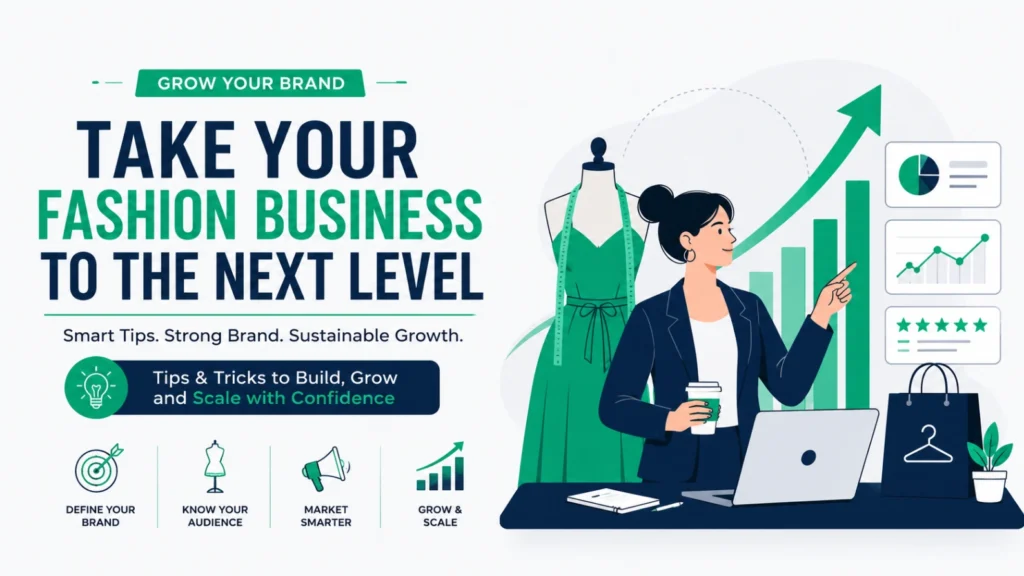
A complete strategy integrates audience research, platform selection, a structured content calendar, influencer and UGC campaigns, paid advertising, community engagement, and consistent performance tracking — working together rather than as isolated tactics.
Many brands run each of these elements separately, which creates disconnected results: great content with no distribution plan, or heavy ad spend with weak organic trust behind it. A complete strategy treats these as one system. For instance, a strong content calendar feeds ad campaigns with proven top-performing organic posts, rather than creating ads from scratch. Community engagement — replying to comments, resharing user content, and responding to DMs — should be scheduled and owned just like content creation, not treated as an afterthought. Performance tracking then closes the loop, showing which platform, format, and message combination actually drives sales rather than vanity metrics. A useful practice is running a monthly review comparing content output against actual outcomes: follower growth, website traffic from social, and conversion rate from social-driven visits. This complete approach is what separates fashion brands with steady, compounding growth from those experiencing short bursts of attention that fade quickly. Learn more about building a content calendar for consistent execution across all these moving parts.
Building Brand Awareness on Social Media for Fashion Brands
Building brand awareness on social media for fashion brands means consistently showing your brand’s identity, values, and products to the right audience until recognition and recall develop naturally through repeated, positive exposure across platforms.
Awareness is often misunderstood as simply “getting more followers,” but true brand awareness is about recognition and association — when someone sees your product styling, color palette, or tone of voice and immediately connects it to your brand, even without seeing the logo. Consistency in visual identity across posts, from color grading to typography in graphics, plays a major role here. Building brand awareness on social media also benefits significantly from collaborations, since partnering with creators or complementary brands exposes you to entirely new, relevant audiences. User-generated content adds another layer, because when real customers post about your brand organically, their networks see it as a genuine recommendation rather than an advertisement. Hashtag campaigns, branded challenges, and consistent use of a recognizable tagline or visual motif all support long-term recall. Brands should measure awareness not only through follower count but through metrics like share rate, brand mention volume, and direct/branded search traffic, which often reflect true awareness growth more accurately than surface-level engagement numbers.
Best Social Media Platforms for Fashion and Clothing Brands
The best platforms for fashion and clothing brands are Instagram, TikTok, Pinterest, and Facebook — each serving a different role, from visual discovery and short-form trends to inspiration boards and community-driven advertising and retargeting.
Choosing the right platform mix depends heavily on your audience and product type, but most fashion brands benefit from focusing on two or three platforms rather than spreading thin across all of them.
Platform | Best For | Content Type | Typical Audience |
Brand storytelling, product discovery | Reels, carousels, Stories | Broad, style-conscious 18–35 | |
TikTok | Viral reach, trend participation | Short-form video, try-ons | Younger, trend-driven 16–30 |
Inspiration, long-term discovery | Outfit boards, style guides | Planning-focused shoppers | |
Community, retargeting ads | Ads, groups, catalog posts | Broader age range, 30+ |
Instagram remains the core hub for most fashion brands due to its strong shopping features and visual-first format. TikTok excels for reach and trend-based virality, particularly for younger audiences. Pinterest works differently — users often plan future purchases there, making it valuable for evergreen discovery rather than instant sales. Facebook, while less trend-driven, remains effective for precise ad targeting and retargeting past website visitors.
Best Fashion Social Media Campaigns to Learn From
The best fashion social media campaigns typically combine a clear creative concept, real customer or influencer participation, and a simple call-to-action — often centered around a challenge, hashtag, or user-generated content theme that’s easy for audiences to join.
Studying best fashion social media campaigns reveals recurring patterns rather than random luck. Successful campaigns usually give the audience something to do, not just something to watch — a challenge to recreate, a hashtag to use, or a story to share. Campaigns built around real customers styling products in their own way tend to outperform purely polished brand-produced content because they feel achievable and relatable to the average viewer. Seasonal or cultural moment tie-ins, such as back-to-school or festival-season styling guides, also perform well because they align with what the audience is already thinking about. A common thread across high-performing campaigns is simplicity: the concept can be explained in one sentence, and participation requires minimal effort from the audience. Campaigns that combine a clear visual theme with an accessible participation mechanic — like resharing customer photos with a specific hashtag — often generate sustained engagement over weeks rather than a single day’s spike, which is a strong sign of genuine audience connection rather than a short-lived trend.
Essential Elements of a Successful Fashion Social Media Strategy
A successful fashion social media strategy includes clear brand identity, audience-specific content, consistent posting frequency, a mix of organic and paid efforts, influencer partnerships, strong visual quality, and regular performance analysis to guide ongoing decisions. Using reliable social media management tools can simplify content scheduling, streamline team collaboration, monitor audience engagement, and provide valuable performance insights, helping fashion brands execute their strategy more efficiently and consistently across multiple platforms.
Each element supports the others, so weakness in one area tends to limit overall results even if everything else is strong. Brand identity, for example, is what makes content instantly recognizable — without it, even well-performing individual posts fail to build cumulative brand recall. Visual quality doesn’t require expensive production; many high-performing fashion accounts use natural lighting and simple editing consistently rather than occasional expensive shoots. Posting frequency matters less than posting reliably — three well-planned posts a week consistently outperform seven random posts followed by silence. Influencer partnerships should be selected based on audience alignment rather than follower count alone, since a smaller, highly engaged, relevant audience often converts better than a large but mismatched one. Finally, performance analysis should look beyond likes to metrics tied to actual business outcomes, such as website clicks, add-to-carts from social traffic, and repeat purchase rate from social-acquired customers, since these more accurately reflect whether the strategy is working commercially, not just socially.
Common Mistakes Fashion and Clothing Brands Make on Social Media
Common mistakes include inconsistent posting, focusing only on product photos without storytelling, ignoring customer comments and messages, chasing every trend without brand relevance, and failing to track which content actually drives sales.
Inconsistency is the most common and most damaging mistake, as algorithms and audience habits both reward reliability. A related mistake is treating social media purely as a catalog — posting product after product without context, styling ideas, or personality — which fails to build any emotional connection with the audience. Ignoring comments and DMs is another frequent issue; potential customers often ask sizing or availability questions in comments, and slow or missing responses directly cost sales. Chasing every viral trend regardless of brand fit can also dilute identity, making a brand’s feed feel scattered rather than distinct. Perhaps the most overlooked mistake is a lack of measurement — many fashion brands post consistently for months without ever reviewing which specific posts or formats are actually driving website visits or purchases, meaning they cannot improve intentionally. Avoiding these mistakes doesn’t require a large budget or team; it primarily requires discipline, responsiveness, and a habit of reviewing performance data regularly rather than posting on instinct alone.
A high-converting plan combines clear goals, audience-targeted content, a consistent posting schedule, shoppable features, retargeting ads, and conversion tracking, ensuring every piece of content has a purpose that moves followers closer to a purchase.
Conversion-focused planning starts with defining what “success” actually means for each type of content — awareness, engagement, or direct sales — rather than treating all posts the same way. Shoppable posts and product tags are essential here, since removing extra steps between interest and purchase directly improves conversion rates; a follower who has to search your website separately is far less likely to complete a purchase than one who can tap directly from the post. Retargeting ads aimed at people who viewed products or visited the website but didn’t buy are consistently one of the highest-ROI tactics in fashion e-commerce, since they reach an audience that has already shown clear interest. A practical plan also includes clear calls-to-action in captions — “shop the look,” “link in bio,” or “limited stock” — rather than assuming intent alone will drive action. Reviewing conversion data weekly, not just monthly, allows brands to catch underperforming campaigns early and reallocate budget or creative effort before too much is spent on an approach that isn’t working.
When Should You Hire a Social Media Marketing Agency for Your Fashion Brand?
When Should You Hire a Social Media Marketing Agency for Your Fashion Brand?
You should consider hiring a social media marketing agency when internal resources can’t keep up with content demands, when results have plateaued despite consistent effort, or when you need specialized skills like paid ad management, influencer outreach, or advanced analytics.
Many fashion brands start social media in-house, which works well in the early stages when the focus is building an initial audience and testing content styles. As a brand scales, the demands multiply — managing multiple platforms, running paid campaigns, coordinating influencer partnerships, and analyzing performance data all require specialized time and expertise that internal teams often can’t sustain alongside other responsibilities. A social media marketing agency for fashion brands typically brings established processes, platform expertise, and industry connections that would take significant time to build internally. A clear signal it’s time to consider outside help is when engagement or sales growth has stalled despite consistent posting, suggesting a strategy or execution gap rather than a volume problem. Cost is naturally a consideration, so many brands start with a hybrid approach — keeping day-to-day community management in-house while bringing in agency support specifically for paid advertising or influencer campaign management, where specialized expertise tends to deliver the clearest return on investment.
Why Social Media Marketing Is Essential for Fashion Brands in 2027
Social media marketing is essential for fashion brands in 2027 because the majority of clothing discovery, trend research, and purchase decisions now happen through social platforms rather than traditional advertising or in-store browsing alone.
Consumer behavior has shifted permanently toward social-first discovery, particularly among younger shoppers who often search for products directly within apps like TikTok and Instagram rather than traditional search engines. This shift means a brand’s social presence functions as its storefront, catalog, and customer service desk simultaneously. Fashion brands without an active, well-maintained social presence risk becoming invisible to a significant portion of their potential audience, regardless of product quality. Social commerce features — in-app checkout, shoppable tags, and live shopping — have also matured significantly, reducing the friction that once separated discovery from purchase. Additionally, social proof through reviews, tags, and user-generated content has become a primary trust signal for online clothing purchases, often influencing buying decisions more than brand advertising itself. For fashion brands specifically, where visual appeal and trend relevance drive so much of consumer interest, social media isn’t a supplementary marketing channel anymore — it has become a core, and in many cases the primary, growth engine for the business.
Future Trends in Fashion Social Media Marketing
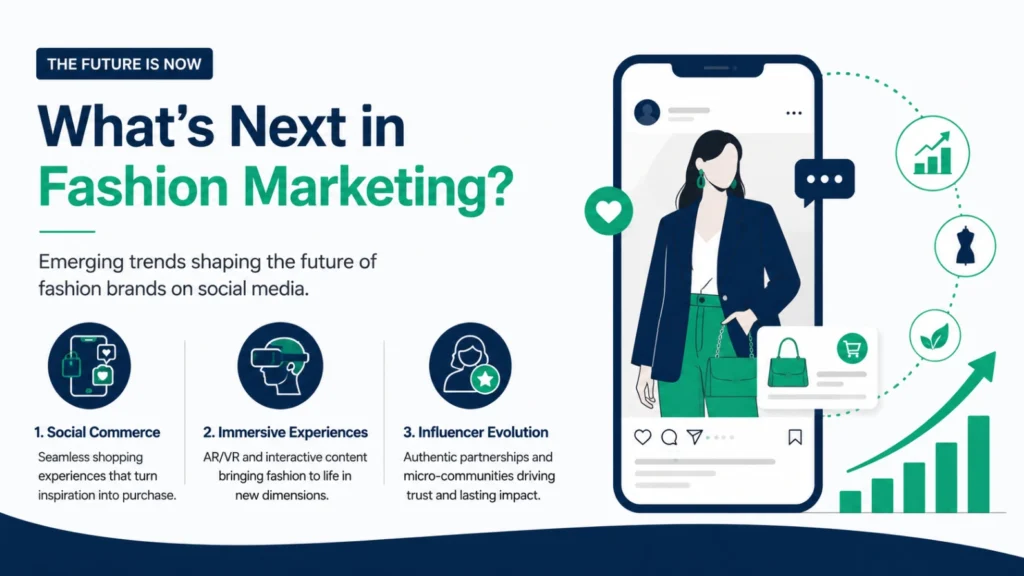
Future trends in fashion social media marketing include AI-driven personalization, augmented reality try-ons, short-form video dominance, live shopping growth, and increasing consumer demand for authenticity, sustainability transparency, and community-driven content over traditional advertising.
AI-driven personalization is increasingly shaping what content users see, meaning fashion brands will need to produce more varied, audience-segmented content rather than a single generic feed strategy. Augmented reality try-on features, already emerging on several platforms, are expected to reduce return rates and increase purchase confidence by letting shoppers visualize fit and style before buying. Short-form video is likely to remain dominant, but audiences are showing growing preference for authentic, less polished content over highly produced advertisements, rewarding brands willing to show real production processes, real customers, and honest behind-the-scenes moments. Live shopping is expected to expand further as platforms continue investing in real-time commerce features that blend entertainment with direct purchasing. Sustainability and ethical sourcing transparency are also becoming stronger purchase influencers, with audiences increasingly expecting brands to communicate openly about materials and production practices rather than relying on vague marketing claims. Fashion brands that adapt early to these shifts — prioritizing authenticity, interactivity, and transparency — are likely to build stronger, more resilient audience relationships than those relying solely on traditional promotional content.
Conclusion
A strong social media strategy for fashion brands isn’t built overnight, but through consistent, audience-focused effort across the right platforms, supported by data-driven decisions rather than guesswork. From understanding your target audience to choosing the right platform mix, avoiding common mistakes, and staying ahead of emerging trends, every element covered in this guide works together as one connected system rather than isolated tactics.
Whether you’re managing content in-house or considering a social media marketing agency for fashion brands, the fundamentals remain the same: authentic storytelling, consistent execution, and genuine engagement with your audience. Start by applying the quick framework outlined earlier, track your results honestly, and refine your approach month by month. Fashion brands that commit to this steady, strategic process are the ones best positioned to build lasting brand awareness, loyal customers, and sustainable growth through social media in the years ahead.
Frequently Asked Questions (FAQs)
The best social media strategy for fashion brands is to create high-quality visual content, post consistently, work with influencers, engage with followers, and use platforms like Instagram, TikTok, and Pinterest. A clear content plan and regular performance tracking help improve brand awareness and sales.
Clothing brands can grow by sharing engaging photos and videos, using trending hashtags, collaborating with influencers, encouraging user-generated content (UGC), and interacting with their audience. Running targeted social media ads also helps attract new customers and increase sales.
Instagram and TikTok are the best platforms for most fashion brands because they focus on visual content and short videos. Pinterest is great for driving website traffic, while Facebook and LinkedIn can support advertising and brand awareness depending on your target audience.
Most fashion brands should post 3–5 times per week and share Stories or short videos daily. The ideal posting frequency depends on your audience, platform, and content quality. Consistency is more important than posting too often.
Yes. Influencer marketing helps fashion brands reach new audiences, build trust, and increase engagement. Partnering with influencers whose audience matches your target customers often delivers better results than working with celebrities who have a broad but less relevant following.
Common mistakes include posting without a strategy, using poor-quality images, ignoring audience engagement, being inconsistent, focusing only on selling products, and not tracking performance. These mistakes can reduce reach, engagement, and conversions.
Social media helps fashion brands build brand awareness, connect directly with customers, showcase new collections, drive website traffic, and increase online sales. In 2027, AI-powered content creation, social commerce, and short-form videos make social media one of the most effective marketing channels for fashion businesses.
Pingback: Top 10 Web Design Companies in Jamnagar (2027 Guide) - GOWITHKRI